
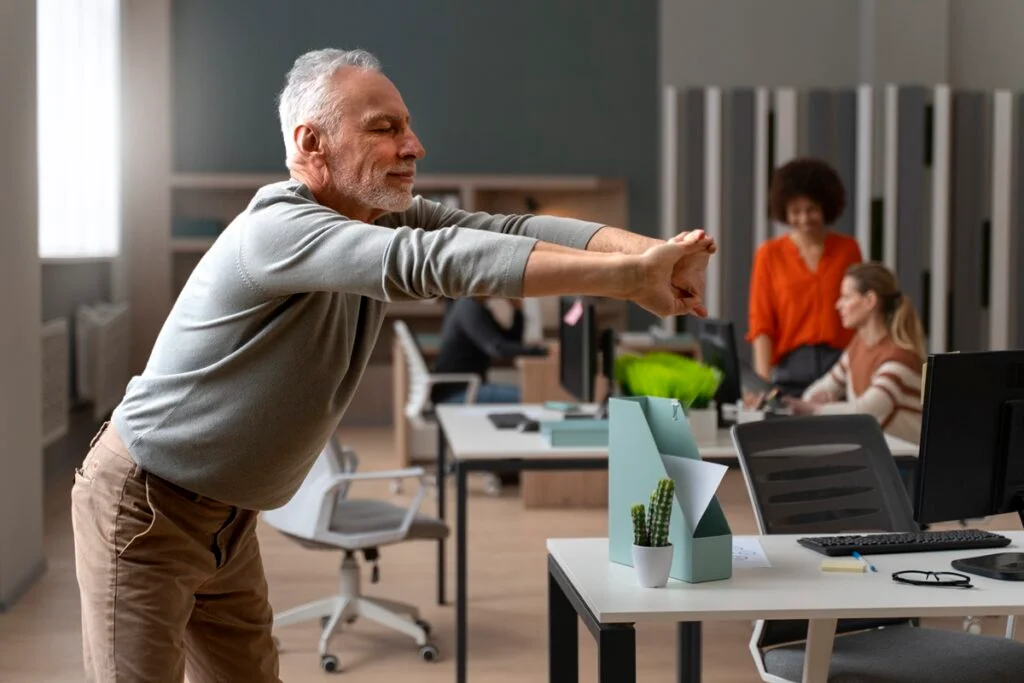

Sitting at a desk for long hours can cause back pain, neck stiffness, muscle tension, and poor posture. Regular physiotherapy exercises can reduce discomfort, improve flexibility, and prevent long-term musculoskeletal problems. Simple movements performed throughout the workday help relax tight muscles, increase circulation, and support better spinal alignment. Even a few minutes of exercise every hour can make a noticeable difference.
Start with a Seated Spinal Twist by sitting upright, placing one hand on the opposite knee, and gently rotating your torso. Hold for 10–15 seconds on each side. Chin Tucks can relieve neck strain by gently drawing the chin backward while keeping the eyes forward. Shoulder Rolls also help release upper-back tension. For a Seated Cat-Cow Stretch, alternate between arching and rounding your back to improve spinal mobility.
To stretch the lower body, perform a Seated Forward Bend while keeping your back straight. Standing Back Extensions are useful for counteracting prolonged sitting—stand tall, place your hands on your lower back, and gently lean backward. Pelvic Tilts activate the core and reduce pressure on the lower back. You can also perform a Hip Flexor Stretch by placing one foot on a chair and leaning forward slightly, as tight hip flexors are common among office workers.
If space is available, try Glute Bridges by lying on a mat with your knees bent and lifting your hips. This strengthens the glutes, core, and lower back. Wall Angels are another effective exercise: stand against a wall and slowly move your arms upward and downward to improve posture and shoulder mobility. Perform these exercises gently and consistently, without forcing any movement. Stop if you experience sharp pain, numbness, or dizziness, and consult a physiotherapist if symptoms continue. Regular movement, correct sitting posture, and short activity breaks can help office workers maintain a healthier, more comfortable, and pain-free back.